


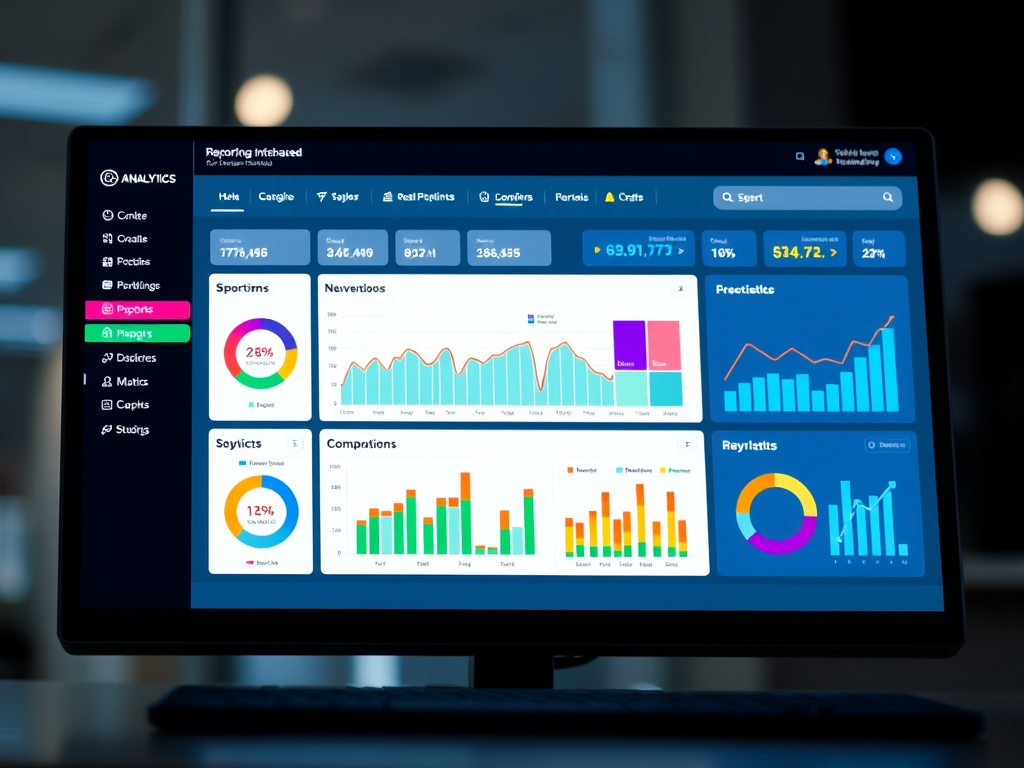
Understanding Reporting and Analytics
Reporting and analytics are essential components of the decision-making process in any organization. They provide valuable insights into business performance, enabling executives and managers to make informed decisions. Reporting primarily serves as a snapshot of business activities at a given point in time, while analytics goes deeper, interpreting data to uncover trends and patterns that aid in strategic planning.
There are two primary types of reporting: operational and strategic. Operational reporting focuses on the day-to-day running of a business, providing real-time data that aids in immediate decision-making. It is useful for monitoring performance indicators, sales figures, and operational efficiency. On the other hand, strategic reporting takes a broader view, summarizing data over a longer period to assess overall business performance and inform long-term strategies. This type of reporting often encompasses various metrics to evaluate the efficacy of different business initiatives.
Analytics brings sophistication to the reporting process and encompasses a range of analytical techniques. Descriptive analytics summarizes past data to provide insight into what has happened, aiding businesses in understanding historical performance. Diagnostic analytics goes a step further, examining the causes behind those trends, thus allowing organizations to identify strengths and weaknesses. Predictive analytics leverages statistical algorithms and machine learning techniques to forecast future outcomes based on historical data, while prescriptive analytics suggests actions to achieve desired outcomes, enhancing the efficiency of decision-making processes.
Together, reporting and analytics empower organizations to use data as a strategic asset. By combining real-time reporting with sophisticated analytical techniques, businesses can not only identify opportunities for improvement but also mitigate risks. This dual approach is critical in today’s data-driven landscape, where informed decision-making can lead to significant competitive advantages.
The Role of Business Intelligence in Decision Making
Business Intelligence (BI) represents a critical component in contemporary organizational decision-making processes. By harnessing data warehousing, data mining, and data visualization, BI tools transform raw data into actionable insights, allowing companies to navigate complex market dynamics efficiently. Data warehousing, the foundation of BI, involves the collection and aggregation of vast datasets from various sources. This central repository facilitates easier access and analysis, enabling organizations to develop a comprehensive view of their operational performance.
Data mining further enriches this process by employing algorithms to discover patterns and relationships within the stored data. This analytical technique allows businesses to identify trends, forecast future outcomes, and make informed decisions based on empirical evidence rather than intuition alone. Furthermore, data mining enhances predictive analytics, which can be crucial for risk management and strategic planning.
Visualization tools play a vital role in communicating the insights garnered through BI processes. By transforming complex data into clear and understandable formats such as charts, graphs, and dashboards, stakeholders can quickly grasp essential information. This capability not only speeds up the decision-making process but also ensures that all members of an organization, including those without technical expertise, can engage with the data effectively.
The integration of BI into decision-making workflows leads to improved operational efficiency. Accurate insights enable companies to promptly identify bottlenecks and streamline processes, ultimately contributing to better resource allocation and reduced costs. Additionally, as organizations continuously analyze market trends and customer behaviors, they are better positioned to adapt their strategies, thus gaining a competitive edge.
In summary, the significance of business intelligence in the decision-making process cannot be overstated. By leveraging data warehousing, mining, and visualization, organizations can transform raw data into meaningful insights that optimize operations and inform strategic planning. Such capabilities are vital for maintaining resilience and adaptability in today’s dynamic business landscape.
Designing Effective Dashboards for Data Visualization
Effective dashboard design plays a crucial role in enabling organizations to visualize data and extract valuable insights. The primary objective of a dashboard is to present information in a manner that is clear, concise, and straightforward. Ensuring clarity involves using visual elements effectively, such as charts, graphs, and tables, which can simplify complex data sets. Simplicity is paramount; dashboards should focus on essential metrics and avoid clutter, making it easy for users to grasp the necessary information at a glance. This approach not only enhances the user experience but also improves decision-making.
Interactivity is another vital principle in the design of a productive dashboard. By incorporating features such as filters, drill-down options, and hover details, dashboards can provide a more comprehensive exploration of the data. Users can engage with the metrics that matter most to them, leading to tailored insights that are relevant to their specific needs. This adaptability is particularly important as different stakeholders within an organization will have varying requirements for data visibility and analysis. Therefore, personalizing dashboards to cater to these diverse needs can significantly enhance their utility and effectiveness.
In terms of technology, numerous tools are available for crafting high-quality dashboards. Popular options include Tableau, Power BI, and Looker, each offering unique functionalities tailored for diverse business scenarios. These tools facilitate seamless data integration and visualization, allowing organizations to create dashboards that provide actionable insights. When designing dashboards, it is critical to ensure that key performance indicators (KPIs) and metrics are prominently displayed, as these elements are vital for stakeholders to monitor performance effectively. Regular reviews and updates of dashboard content can also help ensure ongoing relevance and accuracy of information presented.
Research and Insights as a Service: A Modern Approach
In the rapidly evolving landscape of business, organizations are increasingly recognizing the need for deeper insights to drive decision-making. The growing trend of Research and Insights as a Service (RIaaS) addresses this demand effectively. By leveraging external expertise, companies can obtain valuable findings and analyses without investing heavily in extensive in-house resources. This modern approach allows businesses to focus on core competencies while accessing specialized knowledge.
The offerings under RIaaS are diverse and tailored to meet varying organizational needs. Market research services provide businesses with critical data on industry trends, allowing them to stay ahead of the competition. By analyzing consumer insights, organizations can better understand their target audiences, facilitating the creation of more effective marketing strategies. Additionally, competitive analysis services enable businesses to assess their standing in the market, uncovering strengths and weaknesses relative to competitors.
One significant advantage of adopting RIaaS is the agility it affords organizations. The need for timely and accurate insights is paramount, especially in fast-paced industries. Utilizing external service providers eliminates the lag often associated with in-house research, ensuring that businesses can make informed decisions based on the latest data. Furthermore, this model often leads to enhanced cost-efficiency, allowing firms to allocate funds towards more strategic initiatives rather than extensive research projects.
Numerous case studies illustrate the successful implementation of RIaaS across various sectors. For instance, a leading retail brand that engaged a third-party research firm to gather consumer spending patterns witnessed a substantial increase in targeted offerings, subsequently boosting sales. Similarly, a technology company that utilized competitive analysis services gained insight into emerging threats, leading to innovative product development.
In conclusion, Research and Insights as a Service represents a transformative approach that empowers businesses to tap into external expertise for comprehensive insights. By embracing this model, organizations can enhance their decision-making capabilities, adapt swiftly to market changes, and ultimately drive growth and innovation.